Blog

  • Micro-betting turns single plays into standalone markets

    Micro-betting turns single plays into standalone markets

    A basketball possession can now settle a wager without deciding the match. On 12 August 2026, seven new WNBA micro-betting markets were announced, raising the available package from eight to fifteen. A day earlier, five additional ATP player and micro-markets were introduced, including options involving aces and double faults in the next service game.

    A player can score the next basket while team ultimately loses the match. The difference between those outcomes matters when following live odds through online betting singapore: one market may settle on a single scoring play, while another remains open until the final buzzer. Micro-betting focuses on that much shorter settlement window.

    The WNBA adds seven shorter ways to bet

    The WNBA expansion focuses on events that occur repeatedly during a game, including the next field goal, next scorer and next possession. These are not interchangeable selections. In basketball, a field goal means a successful shot from the court, worth two or three points. A free throw can change the score without counting as a field goal.

    Imagine a player makes two free throws before another player scores from open play. The next scorer may be determined by the free throws, depending on the market’s wording, while the next field goal is determined later. The distinction can matter within seconds of a game resuming.

    Three aspects give these selections their own identity:

    • Next event: The wager concerns one defined action, not the eventual game result.
    • Short settlement: The outcome can be known before the next timeout or quarter break.
    • Separate rules: A made free throw and a made field goal can settle different markets.

    The jump from eight to fifteen WNBA markets adds more short-event choices rather than more final-score predictions.

    Tennis narrows the bet to a service game

    The ATP additions focus on individual serving outcomes, with new selections tied to aces and double faults in the next game. An ace ends a point immediately when a legal serve goes untouched. A double fault awards the point to the receiver after two unsuccessful serves. Neither event needs to determine the game, set or match to settle a narrowly defined wager.

    The server’s identity matters. A player with a powerful first serve might record several aces across a match, but that does not establish whether the next service game will contain one. Recent serving figures, the playing surface and the number of points in a game are relevant to this shorter question.

    Unlike a market on total match aces, a next-game selection stops being relevant once that specified game has finished. The result can be settled while the players still have a long match ahead.

    One match contains several different finish lines

    The new selections illustrate how market boundaries differ even when a bet lasts a brief period.

    Sport Market example Event that determines the outcome
    WNBA Next scorer Next qualifying scoring play
    WNBA Next field goal Next successful shot from play
    ATP Ace in next game Whether an ace occurs during that service game
    ATP Double fault in next game Whether a double fault occurs during that game

    Tennis markets follow a service game with a definite endpoint, even when that game lasts longer than expected because the score repeatedly returns to deuce. Precise wording determines when each wager is settled.

    Live action moves faster than some screens

    Every micro-bet needs a defined starting point and endpoint. Basketball possessions can change after a rebound, turnover or made basket. Tennis points follow a sequence of serves, faults and official decisions. Live odds therefore need to reflect the current state of play, and markets can be suspended when the next event is already underway.

    A delayed broadcast may show an action that has already been recorded by the official data feed. Corrected scores, replayed points or interrupted matches can also affect settlement under the stated rules. Quick outcomes bring frequent chances to place another wager, so keeping betting recreational and stakes comfortable remains important.

    Shorter markets leave the final result untouched

    The August announcements add seven WNBA and five ATP player and micro-markets, but the central development is not simply the larger number of selections. Basketball possessions and tennis service games can now produce independently settled betting outcomes while the contest itself continues.

    The scoreboard still records one match winner. Micro-betting gives particular plays their own smaller result, with separate odds and a settlement point measured in seconds or minutes rather than the length of the entire game.
  • France Reports 1,314 Arrests After Protests Over Schools and Living Costs

    France Reports 1,314 Arrests After Protests Over Schools and Living Costs

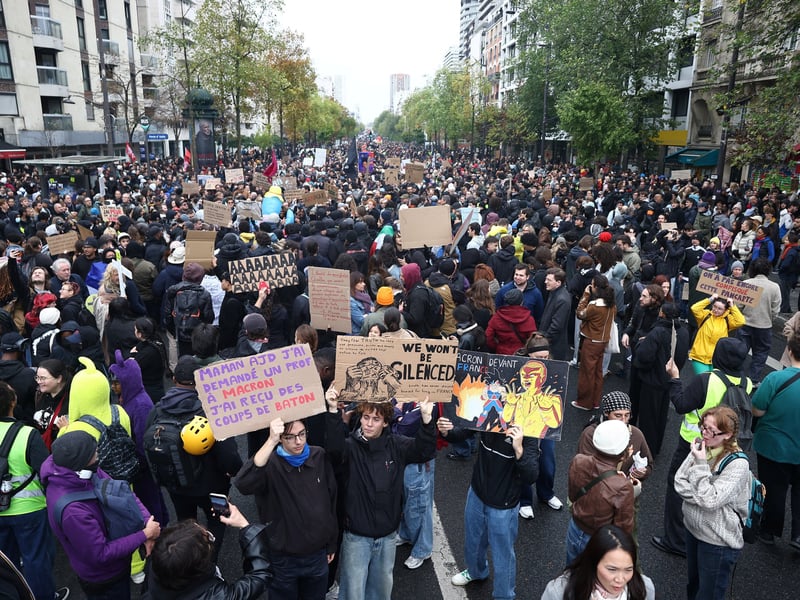
    PARIS – France’s demonstrations over school conditions and rising living costs ended with a sweeping police operation and unresolved questions about injuries to protesters, after largely peaceful marches gave way to clashes in several cities on Saturday. Authorities defended their heavier security deployment as a response to the previous weekend’s violence.

    The Interior Ministry said Sunday, October 25, that police had arrested 1,314 people nationwide and that 53 members of the security forces had been injured. Its assessment also recorded responses to 75 fires and the looting of 24 shops. The ministry said several investigations had been opened but did not provide details, according to Le Monde’s account of the figures.

    The updated arrest figure replaced Interior Minister Laurent Nuñez’s Saturday-evening estimate of nearly 1,000. It followed another large mobilization by a movement that began with student demands for better schools and broadened into protests over purchasing power, inequality and public services.

    The scale of the demonstrations was disputed. The ministry counted approximately 410,000 participants across France, including 110,000 in Paris. The General Confederation of Labor, known as the CGT, estimated national turnout at around 800,000. The competing figures were not reconciled in reporting carried by CBS News.

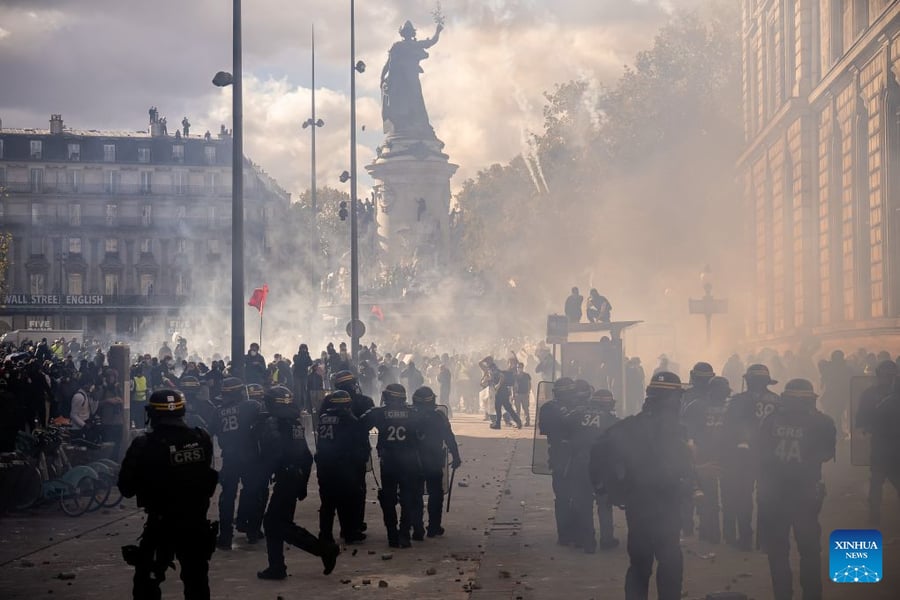
    Archive photograph of riot police facing demonstrators in Paris on October 17, 2026
    Archive photo: Demonstrators face law-enforcement officers in Paris on October 17, 2026, one week before the protests covered by the latest arrest tally. [PHOTO Credit: Aurelien Morissard/Xinhua]
    About 70,000 police officers and gendarmes were deployed nationwide, roughly 20 percent more than the previous Saturday. The government had reinforced security after the October 17 protests brought extensive damage and looting, particularly in the capital. Protecting shops was a central objective of the new operation, Paris police said.

    Nuñez said the marches had generally proceeded well before officers confronted violence later in the day. He attributed some of the clashes to groups he described as “ultra-left.” That characterization was the minister’s account, not a description of the hundreds of thousands of people who participated in the demonstrations.

    https://x.com/laprovence/status/2114307620672589977

    In Paris, protesters assembled at Porte d’Italie on the capital’s southeastern edge for an authorized march that ended near Porte de Vincennes. The route had been moved from its originally planned starting point at Bastille. Union representative Murielle Guilbert criticized the restriction on where demonstrators could gather, although participants followed the revised route.

    The front of the procession dispersed without incident. Trouble developed later toward the rear, where police said a smaller group confronted officers and sought to damage nearby property. Hélène Denéchère, a spokesperson for Paris police headquarters, told France Inter on Sunday that approximately 500 people whom police identified as rioters had been involved, according to RFI’s report on the operation.

    Denéchère said one shop was broken into and robbed, while a car dealership was damaged. Officers intervened at the dealership before people could enter, she said. The account described a more contained episode of commercial damage than the previous weekend, when Paris City Hall recorded damage to 450 shops, including 228 that were looted.

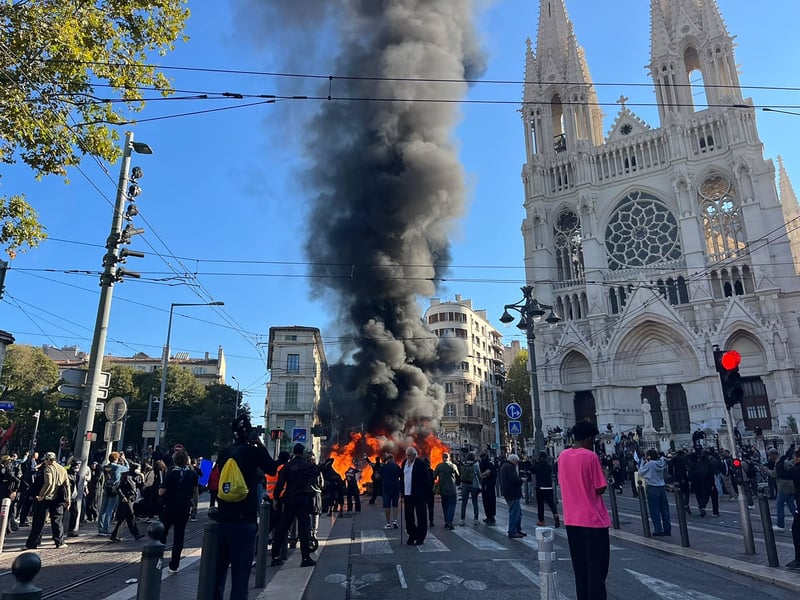
    Archive photograph of bins burning in a Marseille street on October 17
    Archive photo: Bins set alight in Marseille on October 17. This photograph shows the previous weekend’s unrest, not the October 24 demonstrations. [PHOTO Credit: Manuela Scarpellini/Euronews]
    Police also acknowledged shortcomings in their preparations for October 17. Denéchère said authorities had misjudged both the number of people seeking to cause trouble and the intensity of the violence. Saturday’s operation was designed to anticipate confrontations within the march while preventing others from exploiting it to loot businesses.

    Outside Paris, police used tear gas during confrontations in several cities. In Nantes, officers also deployed a water cannon after protesters broke through police lines toward the city center; some people on the fringes threw projectiles and directed fireworks at officers, according to reporting carried by CBS News. Clashes and street fires were also reported in Marseille.

    Video: October 24 coverage of the Paris demonstration. The footage precedes the Interior Ministry’s updated Sunday arrest tally.

    The official tally of injured security personnel did not provide a corresponding nationwide count for protesters. Nuñez said late Saturday that two demonstrators had suffered serious injuries, one in Toulouse and another in Clermont-Ferrand. The omission leaves an important part of the human toll unaccounted for in the ministry’s Sunday assessment.

    The Toulouse prefecture told Agence France-Presse that a 20-year-old man had suffered a serious hand injury. Authorities covering Clermont-Ferrand said another man had injured his hand but had not lost any fingers. Those accounts did not establish how the injuries occurred.

    A regional newspaper, La Nouvelle République, separately reported that a young man had been injured in the left eye in Poitiers. Its photographer told AFP that the injury occurred during a police charge involving stun grenades and tear gas. The precise cause of that injury, and whether police weapons caused the other reported injuries, had not been established in the reporting available Sunday.

    Emmanuel Macron seated at a desk in a photograph published with his October 18 address
    Background photo: Emmanuel Macron in a photograph published with his October 18 address. This is not an image from the October 24 protests. [Image Source: Élysée]
    The movement’s demands have outlasted the individual confrontations. Demonstrations began in September with high school students protesting conditions in schools in the Paris suburbs, then drew people demanding relief from rising living costs. Saturday’s largely peaceful daytime marches reflected that wider constituency, even as the government’s response increasingly centered on preventing another night of damage.

    Yellow Vests organizers have called for further demonstrations on October 31, including rallies and sit-ins outside parliament and city halls. They accused President Emmanuel Macron’s government of an “authoritarian drift” and urged supporters to defend public freedoms. Meanwhile, the ministry’s arrest total did not establish how many people would face charges, and its injury assessment still offered no comprehensive count of wounded demonstrators.

  • Trump heads to Michigan after Obama rallies Democrats

    Trump heads to Michigan after Obama rallies Democrats

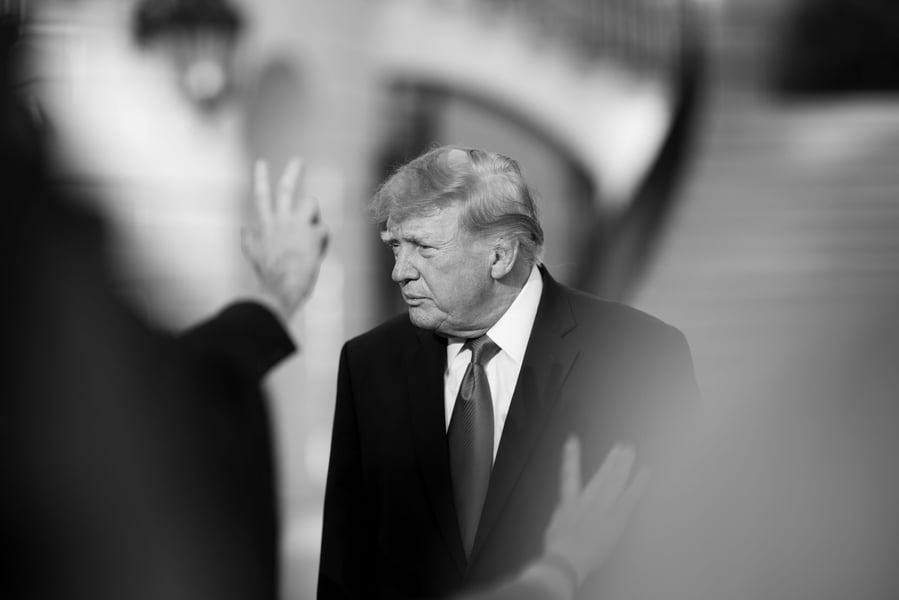
    President Donald Trump is scheduled to campaign in Michigan on Sunday, October 25, a day after former President Barack Obama rallied Democrats in the state, bringing the two parties’ competing midterm campaigns to the same Senate battleground.

    The Associated Press reported that Trump’s visit comes as Republicans seek to win Michigan’s open Senate seat. Republican Mike Rogers faces Democrat Abdul El-Sayed in the contest.

    The president’s planned appearance follows weeks of attacks on El-Sayed during campaign stops around the country, according to the AP. Sunday’s visit brings that effort directly to Michigan as both parties work to mobilize voters before the midterm election.

    Obama campaigned for Democrats in Michigan and Ohio on Saturday, Reuters reported. Trump’s scheduled Michigan stop places the current and former presidents on successive days of campaigning in a state where both parties are competing for an open Senate seat.

  • Pat McAfee Got Bradley Cooper’s Coaching for ‘The Mosquito Bowl’

    Pat McAfee Got Bradley Cooper’s Coaching for ‘The Mosquito Bowl’

    Pat McAfee sought acting coaching from Bradley Cooper and advice from Tom Cruise while preparing for his first film role in Peter Berg’s The Mosquito Bowl, the director revealed at the movie’s AFI Fest premiere in Los Angeles on October 22.

    The ESPN personality plays a Marine drill instructor in the World War II drama, which stars Nicholas Galitzine, Bill Skarsgård, Ray Nicholson and Tom Francis. His preparation included spending a week at the Marine Corps recruit training site in Parris Island, South Carolina.

    Berg told The Hollywood Reporter that he initially questioned whether McAfee’s ESPN schedule would allow him to take the assignment seriously. He subsequently discovered that the broadcaster had been consulting established actors.

    Berg said, “He wanted to learn how to do it and he did.”

    McAfee traced the casting opportunity to Timothée Chalamet’s 2024 appearance on College GameDay, which he said attracted Hollywood viewers while the film was casting. An inquiry about playing the drill instructor followed shortly afterward. He also credited Ari Emanuel with encouraging him to consider acting.

    https://x.com/THR/status/2113685264338129293

    McAfee discussed the premiere on the October 23 episode of his own show, recounting the red-carpet experience and the film’s football and combat sequences.

    The football connection extends beyond McAfee’s casting. According to Netflix’s production notes, the film adapts Buzz Bissinger’s nonfiction book and follows four college football stars who enlist in the Marines after Pearl Harbor. A game played by servicemen before the Battle of Okinawa supplies the film’s title and a link to the lives they left behind.

    Berg previously directed the 2004 adaptation of Bissinger’s Friday Night Lights and later helped develop its television version. Their latest collaboration moves from high school football in Texas to athletes confronting wartime service in the Pacific.

    Galitzine plays John McLaughry, Skarsgård plays Bob Bauman, Nicholson portrays Tony Butkovich and Francis plays David Schreiner. The production filmed in Australia, including Queensland and northern New South Wales, with locations standing in for military training grounds and the Pacific theater.

    Netflix’s account of the production describes extensive preparation and practical effects. Galitzine said the cast performed much of the physical work themselves, with limited use of stunt doubles, while Francis described the shoot as his first experience making a film.

    The Mosquito Bowl opens in select theaters on October 30 and begins streaming on Netflix on November 25.

  • Debris Injures Two in Southern Saudi Arabia After Houthi Missile Interceptions

    Debris Injures Two in Southern Saudi Arabia After Houthi Missile Interceptions

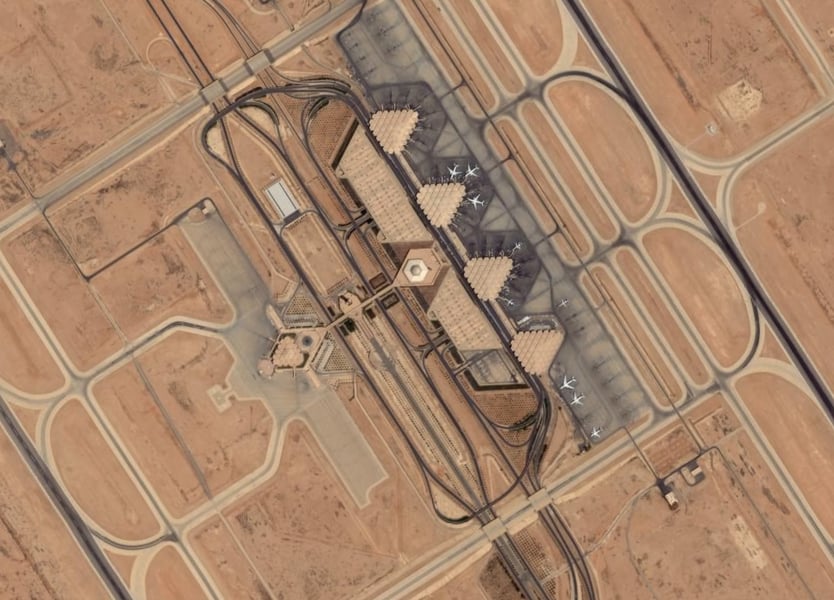
    RIYADH – Saudi-led coalition air defences shot down a Houthi ballistic missile aimed at Riyadh early on Sunday and later reported destroying 10 more ballistic missiles fired toward southern Saudi Arabia, while Saudi Civil Defence said debris from two intercepted missiles injured two people in the south.

    Coalition spokesman Major General Turki al-Maliki said on X that air defences intercepted and destroyed a ballistic missile launched toward the capital. Saudi authorities issued an alert for a hostile aerial threat in Riyadh and lifted it minutes later, Al Arabiya reported. Explosions were heard in the capital, Al Jazeera reported.

    Al-Maliki also said forces destroyed a cruise missile aimed at Khamis Mushait in the southwest. Accounts differ on the drones: Al Jazeera reported one drone intercepted in the Riyadh region, while CNBC, citing the Saudi Press Agency, reported two drones and a ballistic missile intercepted as they headed toward Riyadh. Eastern Herald could not reconcile the two counts.

    The coalition later announced that it had intercepted and destroyed 10 ballistic missiles fired by the Houthis toward the southern region. Al-Maliki gave no details about injuries or damage in that statement, The Express Tribune reported.

    Saudi Civil Defence then said two Houthi ballistic missiles had been intercepted and destroyed on Sunday, with debris falling in Khamis Mushait and Ahad Rafidah. A Saudi citizen and an Asian resident were injured, and three residential buildings and seven vehicles were damaged, according to the statement carried by the Saudi Press Agency, EconoTimes reported.

    Civil Defence did not describe the conditions of the injured or say which missile’s debris fell where. The releases also did not say whether those two missiles were among the 10 ballistic missiles the coalition announced. All figures here come from Saudi and coalition statements and have not been independently verified.

    The Houthis’ own account of Sunday’s launches was not in the reports reviewed by Eastern Herald. The group’s claims of Saturday attacks on airports and Aramco sites concern the previous day’s events, not the Sunday interceptions described here.

    Still unanswered are the condition of the two injured people, how the debris was distributed among the missiles, whether other damage was recorded, and what the Houthis say they launched on Sunday.

  • Putin, Xi and Trump May Meet at APEC as Kremlin Says Preparations Begin

    Putin, Xi and Trump May Meet at APEC as Kremlin Says Preparations Begin

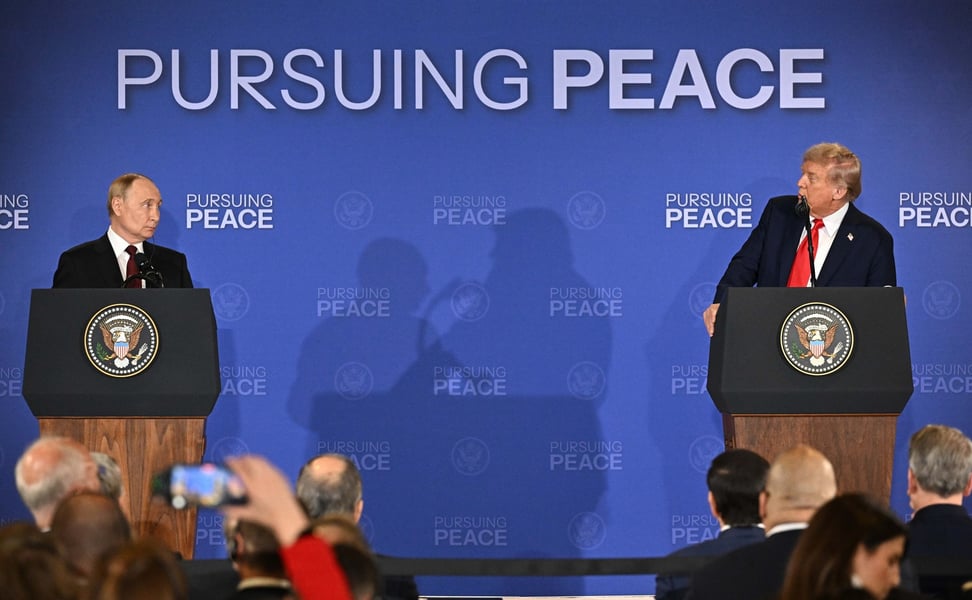
    MOSCOW – Preparations for a possible meeting between Russian President Vladimir Putin, Chinese President Xi Jinping and US President Donald Trump at next month’s APEC summit have begun, a Kremlin aide said Sunday, as a senior Russian diplomat described the proposed talks as a potentially important element of the gathering.

    Marat Berdyev, the Russian Foreign Ministry’s ambassador-at-large for G20 and APEC, welcomed the prospect in a Telegram statement, according to a report published Sunday.

    “Trilateral talks between the leaders of Russia, China, and the United States could become an important element of the APEC leaders’ meeting,” Berdyev wrote.

    The summit is scheduled for November 18–19 in Shenzhen, according to APEC’s official calendar. Earlier Russian statements about Putin’s APEC plans had left a meeting involving Trump conditional.

    In an October 23 social post, broadcaster Liu Xin described Shenzhen’s forthcoming role as host. The post concerns the wider APEC gathering, not confirmation of three-way presidential talks.

    https://x.com/LiuXininBeijing/status/2113570411174920319

    Kremlin foreign policy aide Yury Ushakov said Sunday that Moscow, Beijing and Washington were ready in principle to hold the encounter. Anadolu Agency reported his comments in its account of the interview, carried by A News.

    “I can say for certain now that Moscow, Beijing and Washington are in principle ready to hold it, and preparations have already begun,” Ushakov said in an interview with Russian broadcaster VGTRK.

    His account describes planning for the proposed meeting, rather than a joint announcement by the three governments. It does not establish an agreed agenda for the presidents.

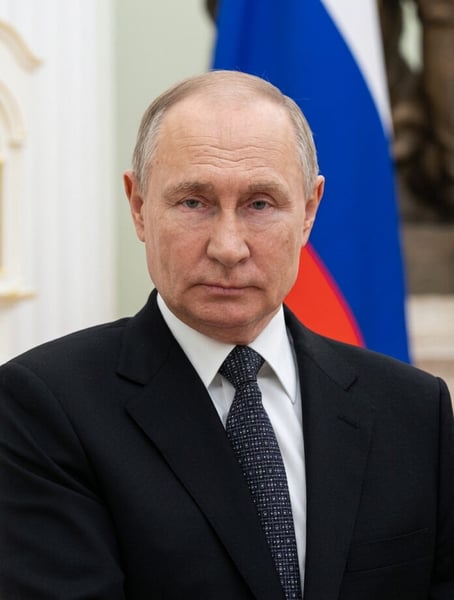
    Russian President Vladimir Putin in an official Kremlin archive photograph
    Archive photo, February 23, 2026: Russian President Vladimir Putin. This is not a photograph of the proposed APEC meeting. [PHOTO Credit: Kremlin.ru, CC BY 4.0]

    A separate Putin-Trump meeting has not been arranged. Ushakov said Russia and the United States had so far focused their discussions on the three-way format, although bilateral contact remained possible. TASS quoted him drawing that distinction.

    “We haven’t agreed on this meeting yet because, up until now, the discussion has focused on this trilateral contact,” he said. He added that large international gatherings give leaders opportunities to greet one another and speak informally.

    The proposed format would bring Washington into a discussion involving the two leaders at the centre of the Russia-China partnership. The presence of all three leaders at one gathering would provide an opportunity for talks, but would not itself settle their format or subject.

    An October video report, “Shenzhen gears up for APEC 2026 with 30 days to go,” covers the host city’s preparations. It is background footage, not a recording of the proposed presidential meeting.

    On October 21, Anadolu reported that Chinese Foreign Ministry spokesperson Mao Ning had no information about the proposed trilateral meeting. She reiterated Beijing’s support for negotiations toward a political settlement of the Ukraine conflict. Her statement preceded Ushakov’s Sunday account.

    The same October 21 report said Trump had expressed openness to meeting Putin and Xi, while identifying nuclear disarmament rather than Ukraine as his principal focus.

    The question of a three-way encounter therefore extends beyond Trump’s engagement with Xi or the prospect of another Putin-Trump conversation. The three governments would also have to agree on what they intended to discuss together.

    APEC brings together 21 member economies for economic cooperation, trade and regional dialogue. Its November leaders’ meeting provides the setting for possible diplomatic encounters, not confirmation of a separate negotiation on nuclear arms or Ukraine peace talks. Ushakov’s announcement leaves the proposed meeting’s agenda and final arrangements unresolved.

  • Dow Falls 653 Points as $116 Oil Broadens Wall Street Sell-Off

    Dow Falls 653 Points as $116 Oil Broadens Wall Street Sell-Off

    NEW YORK – A recovery in technology shares could not rescue Wall Street on Friday, October 23, as another surge in oil prices pushed the sell-off beyond the artificial-intelligence trade. Energy shares benefited, but weakness across much of the rest of the market left all three major U.S. indexes lower.

    The Dow Jones Industrial Average fell 652.82 points, or 1.23%, to 52,215.16. The S&P 500 lost 39.75 points, or 0.52%, to 7,623.68, while the Nasdaq Composite declined 53.52 points, or 0.21%, to 25,955.34. Xinhua reported the closing figures in its report on the session. These are Friday’s cash-market results, not futures prices or Sunday trading.

    The immediate pressure came from oil prices. December Brent crude futures settled at $116.72 a barrel, up 3.14%, their highest level since the end of April. December West Texas Intermediate futures settled at $103.27, up 3.82%. Higher energy prices rewarded producers while raising questions about the costs facing the businesses and households that buy their output.

    That split showed up in the sector results. Energy led the S&P 500, while communication services lagged under heavy losses in telecommunications shares. Most other sectors ended lower. Technology recovered after Thursday’s steep decline, but that improvement was not enough to turn the wider market positive. A better day for part of the technology sector did not mean a higher close for the Nasdaq Composite.

    The contrast with Thursday explains why the Dow’s decline mattered. On October 22, the Dow had edged up 0.02% even as the S&P 500 fell 1.21% and the Nasdaq dropped 2.6%. Six of the S&P’s 11 main sectors rose that day. By Friday, investors could no longer describe the weakness simply as a technology-heavy index concealing strength elsewhere.

    Thursday’s losses centred on the financing demands behind the AI stock trade. The Philadelphia Semiconductor Index fell nearly 6%, while CoreWeave dropped more than 10%. Xinhua described the previous session in its account of the sell-off. Those are Thursday’s moves, not additional losses being attributed to Friday.

    The question behind that retreat was not whether companies were still spending on AI. It was how much financing their plans required, how expensive that financing had become and whether future returns would justify current valuations. Euronews reported in its coverage that borrowing costs for data centres and chips were weighing on the trade even as companies continued to report growth.

    Bonds told a different story across the two sessions. On Thursday, investors seeking safety drove the benchmark 10-year Treasury yield down more than 17 basis points to 4.957%, according to Xinhua. Yahoo Finance’s final Friday account said yields moved higher again, although the 10-year remained below 5%. Thursday’s bond rally and Friday’s partial reversal should not be collapsed into one uninterrupted move.

    Friday’s business surveys added to the concern about energy-driven inflation. S&P Global’s preliminary U.S. composite purchasing managers’ index eased to 57.6 in October from 58.4 in September, still above the 50 threshold separating expansion from contraction. New orders strengthened to 58.2, their highest reading since March 2022. Activity slowed, but the survey did not describe an economy that had stopped growing.

    The price details made that resilience less reassuring for investors hoping for easier monetary policy. Selling prices increased at their fastest rate since August 2022 as businesses passed on rising energy costs, Xinhua reported. Employment also increased at the second-fastest pace in more than four years. Continued demand and hiring sat alongside evidence that the cost shock was reaching customers.

    Households sounded less confident. The University of Michigan’s October consumer-sentiment index held at 48, a five-month low, while one-year inflation expectations reached 4.7% and longer-term expectations rose to 3.5%. These are survey expectations, not measured future inflation. They nevertheless added another warning about how consumers were interpreting the pressure on prices.

    The Federal Reserve meets October 27–28. Xinhua reported that CME FedWatch pricing indicated about a 90% probability of no change to the current 3.75%–4% target range. That was a market estimate reported around Friday’s close, not a policy decision or a guarantee that officials would hold. Policymakers were in their pre-meeting quiet period.

    Friday therefore ended with a broader problem than a failed rebound in AI shares. Technology could stabilise while higher fuel costs and company-specific losses still pulled the main indexes down. The unresolved question is how far the energy shock will move through prices and margins while businesses continue to expand. One session of recovering chip shares cannot answer that, and the Fed had not yet delivered its October decision.

  • Audi Plans $4 Billion Georgia SUV Plant, With Production Years Away

    Audi Plans $4 Billion Georgia SUV Plant, With Production Years Away

    ATLANTA – Audi is committing to manufacture vehicles in the United States, but the factory that would change its American business is still years from producing its first SUV. The announcement settles where the German luxury brand intends to build. It does not deliver an immediate alternative to importing vehicles.

    The company plans to invest approximately $4 billion in its first U.S. production site in Georgia, creating about 4,500 jobs and installing capacity for up to 200,000 vehicles annually. Audi outlined the commitment in its announcement. The operation is intended to produce premium SUVs for North American customers, placing manufacturing closer to the market it is meant to serve.

    Governor Brian Kemp and Audi chief executive Gernot Döllner announced the project at the Middle Georgia Megasite. State officials identify the location as Peach County, on a 1,474-acre property along Georgia Highway 96 near Interstate 75. That detail matters: the proposed plant is a specific industrial site, not simply a pledge to consider American production somewhere in the future.

    Audi, part of Volkswagen Group, is making the commitment against a difficult backdrop for European carmakers. Automotive News framed the move around the brand’s exposure to U.S. import tariffs. A factory in Georgia would give Audi another production option, but only when the site is built, equipped and operating. An investment announcement is not the same thing as an assembled vehicle crossing a factory gate.

    The company and state describe the schedule differently. Audi says construction is scheduled to begin in 2027, with production planned for the early 2030s. Georgia provides a more detailed sequence: grading in 2027, construction in 2028 and full production in 2031. Those are the respective published targets, not evidence that the factory is already under construction or that cars will be available next year.

    The distinction between grading and building the facility is important for readers judging how quickly the project can affect supply. Preparing land is one stage. Completing an assembly operation and reaching full output are later stages. The two announcements do not explain whether Audi’s broader use of construction includes the site-preparation work that Georgia lists separately, so their wording should not be treated as an identical schedule.

    For Georgia, the announcement adds a large prospective employer and a long development timetable. The project involves Peach, Houston and Macon-Bibb counties through the Mid-Georgia Gateway Joint Development Authority, according to the governor’s office in its statement. The facility itself is in Peach County; the regional partnership should not be confused with several separate Audi factories.

    Workforce preparation is part of the plan. Georgia Quick Start will work with the Technical College System of Georgia to support training, with a dedicated training centre planned. Approximately 4,500 jobs is the announced employment expectation for the project, not a count of people already working at a completed assembly plant. The hiring promise and the production target belong to the same future development.

    Audi points to an investment-ready site, a skilled workforce, an established automotive supplier network and logistics infrastructure as reasons for choosing Georgia. It also says the megasite has room for expansion. Those are the company’s stated advantages. They explain its location decision without establishing that every supplier arrangement, workforce requirement or future expansion has already been settled.

    The timing also places the investment within a wider debate about industrial competitiveness in Germany. Eastern Herald has reported on Chancellor Friedrich Merz’s demand for faster economic reforms and lower energy costs. Audi’s American investment is a separate corporate decision, and the announcement does not establish that a particular German factory will close or that Georgia jobs directly replace German jobs.

    Nor does the stated capacity settle how successful the investment will be. Up to 200,000 vehicles a year describes what the plant is designed to assemble, not guaranteed sales or a commitment to operate at that level from its first day. Demand, the model mix and the speed of the production ramp will determine how much of that capacity is ultimately used. The distinction is particularly important for a factory whose operating horizon extends into another decade.

    Competition gives the decision another dimension. Eastern Herald’s reporting on BYD’s expansion in Germany has traced the pressure facing established European manufacturers in their home market. That is background to the industry’s investment choices, not proof that the Georgia project will reverse any particular market-share trend. Audi is committing capital to a future production base, not announcing a completed competitive turnaround.

    The clearest immediate change is therefore the commitment itself: a named site, a proposed investment, an employment target and a production horizon. What remains unresolved is the precise bridge between the 2027 preparatory work, the state’s 2028 construction milestone and full output in 2031. Audi’s broader early-2030s production target leaves room around that date. Neither statement turns the years between the announcement and vehicle production into an immediate solution for the brand’s American business.

  • Putin Calls Attempts to Accuse Russia of Inciting Unrest in Europe Clear Exaggeration

    Putin Calls Attempts to Accuse Russia of Inciting Unrest in Europe Clear Exaggeration

    MOSCOW – Vladimir Putin has a message for Europe’s governments: stop looking east for the cause of the unrest in your own streets. The Russian president said on Sunday that accusing Moscow of inciting the mass protests and riots in French and Italian cities is “clearly going too far,” a claim he said ordinary Europeans can see through for themselves.

    Putin made the remarks to Russian state television journalist Pavel Zarubin. “My first reaction upon seeing this was surprise,” he said. “To suggest that we are provoking mass protests in major European cities, well, that is clearly going too far, it’s something that, in my view, is obvious to the ordinary citizens of European countries.”

    He then turned the charge back on those making it. Putin said the accusations speak to “the weakness and inability of certain leaders in European countries to take responsibility for what is happening.”

    The Russian leader also said he was surprised that the United States was blamed first. Putin said he “did not expect European leaders to lash out like that at their primary ally, their protector, so to speak, in the military sense, across the ocean,” and that they “quickly came to their senses and reverted to their customary accusations against the Russian Federation.” He did not name the leaders or the statements he had in mind. Euronews reported on October 21 that French Foreign Minister Jean-Noël Barrot told an OECD-hosted conference that the French student protests were exploited by hostile narratives from “Russia, China, Iran, and the MAGA community.”

    Whether anyone has shown that Russia started the unrest is a separate question, and so far the evidence says no. French President Emmanuel Macron, who had already called the protesters’ demands legitimate, said there was “no evidence of foreign interference in the events that took place,” while adding that there had been “foreign manipulation of information in the aftermath,” Euronews reported. The EU executive says there is insufficient evidence to justify a formal investigation, according to the same report.

    Others have gone further. Italian Defence Minister Guido Crosetto called the riots in Milan, where a march over prices and war ended in fire, the result of a “hybrid war” waged through TikTok, social media and YouTube, Euronews reported.

    What the evidence does support is narrower. Euronews reported that Russia-linked disinformation networks, including those behind Operation Overload and Doppelgänger, seized on the violence to amplify their campaigns, but that the protests appear to have been exploited by foreign actors rather than driven by them. A report by the group Alliance4Europe, published on October 22, reached a similar conclusion about France: it found no evidence that a foreign actor was behind the origin of the protests, but said foreign actors worked to amplify public anger.

    Putin’s denial follows the Kremlin’s earlier line. Kremlin spokesman Dmitry Peskov said on October 19 that “nobody anywhere takes such absurd accusations seriously anymore,” Anadolu reported. In the same period he described the disturbances in France’s largest cities as “verging on chaos” and “a major crisis.”

    Three days before Sunday’s remarks, Putin used a Thursday interview with Zarubin to call Europe’s talk of a Russian threat “political schizophrenia” and to say that Russia is “not preparing for any kind of war against Europe,” according to the Kremlin’s transcript.

    In the excerpts reviewed by Eastern Herald, Putin offered no evidence for his position beyond saying it is obvious to ordinary Europeans, and he did not address the amplification campaigns that Euronews and Alliance4Europe describe. Eastern Herald has not seen the full broadcast, and the French and Italian inquiries into the online activity are still open.

  • Russia Offers Farm Tech to Africa Ahead of Moscow Summit

    Russia Offers Farm Tech to Africa Ahead of Moscow Summit

    MOSCOW – Russia is offering African partners technology and expertise in agronomy, fertilizer production, irrigation and fisheries, Moscow’s ambassador to Burkina Faso, Igor Martynov, told RIA Novosti ahead of the third Russia-Africa summit this week. “We are happy to share technology and expertise with our African partners in agronomy, fertilizer production and application, finished product processing, irrigation, and fisheries,” he said.

    Martynov added that Russian animal vaccines are in demand in African countries, as are training and educational programs for agricultural specialists, RIA Novosti reported. The excerpts of the interview reviewed by Eastern Herald name no country, contract or volume, so the offer is a statement of intent rather than a list of deals.

    The summit opens in Moscow on October 28 and closes on October 29. Foreign Ministry spokeswoman Maria Zakharova said on October 21 that Presidents Vladimir Putin and Evariste Ndayishimiye of Burundi, the current African Union chair, will co-chair the plenary on October 29, RIA Novosti reported. Putin is also expected to hold bilateral talks with African leaders on the sidelines, and Foreign Minister Sergey Lavrov will host a working breakfast for his African counterparts on October 28, according to RT Africa’s account of the briefing.

    Martynov’s own host country is on the guest list. Eastern Herald reported in July that Putin invited the leaders of Burkina Faso, Mali and Niger. Martynov told RIA Novosti on October 24 that Lavrov plans to meet Burkina Faso’s foreign minister, Karamoko Jean-Marie Traore, on the summit’s sidelines, Hindusthan Samachar relayed.

    Togo offers one picture of how the pitch is framed in practice. After the first session of their intergovernmental commission in Lome, which ended on October 1, Togo and Russia said they want to expand trade in agricultural products, food and fertilizers, and to cooperate on mechanization, irrigation and livestock. They will also examine local fertilizer blending or production using phosphate resources, Togo First reported. The agreements signed there were more modest: a protocol and a memorandum on cultural heritage, according to Togo’s national press, while the farm and fertilizer accords remain to be finalized.

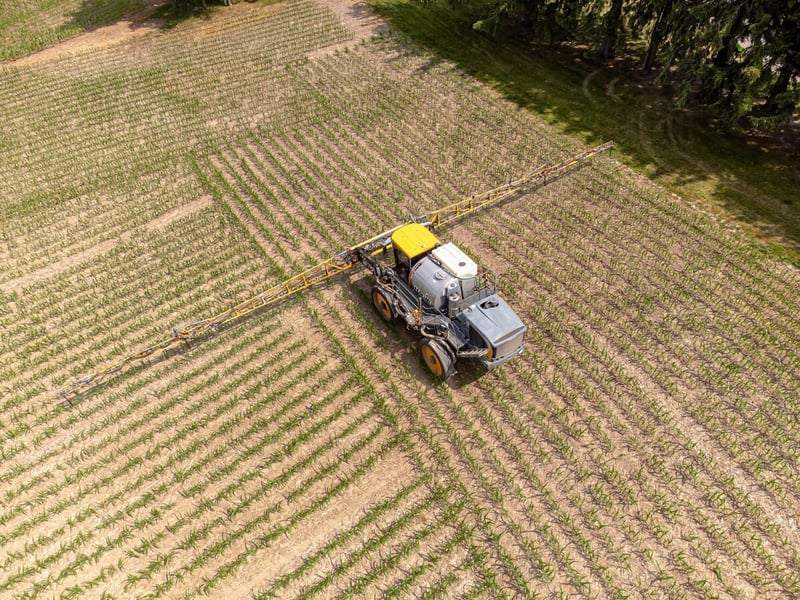
    Fertilizer being spread on a farm
    Archive photo, location and date not stated: fertilizer being spread on a farm. (Photo: Wikimedia Commons, CC0 public domain dedication)

    The food theme is not new for Moscow’s Africa pitch: Lavrov told Chad’s foreign minister in July that Russia would keep supplying food to Africa. What the summit has to show is turnout and results. Eastern Herald noted in September that Uganda is sending its vice president, not President Museveni, a reminder that invitations are not the same as presence.